
Fran’s Guide to Interfacing for Crafting Projects
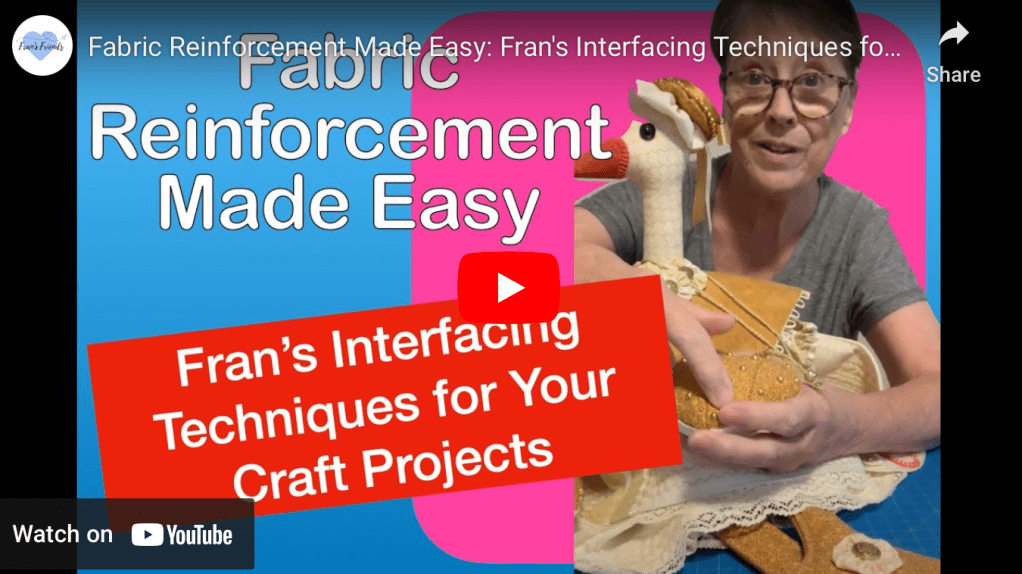
Interfacing is a key element in many crafting projects, as it can help to stabilize fabrics and improve the overall outcome of the project. In this video, Fran discusses the importance of interfacing and shares her tips for using it effectively.
Types of Interfacing
There are two main types of interfacing: fusible and non-fusible. Fusible interfacing has a heat-sensitive adhesive that melts when ironed, allowing it to bond to the fabric. Non-fusible interfacing is not adhesive and must be sewn or hand-stitched to the fabric.
Interfacing Weights
Interfacing comes in a variety of weights, from featherweight to heavyweight. The weight of interfacing you choose will depend on the type of project you are working on. For example, lightweight interfacing is best for delicate fabrics, while heavyweight interfacing is more suitable for sturdy pieces like hats and purses.
Fran’s Tips for Using Interfacing
- Choose the right type of interfacing for your project.
- Cut the interfacing to the same size as the fabric you are working with.
- Place the interfacing wrong side down on the wrong side of the fabric.
- Iron the interfacing in place.
- If using non-fusible interfacing, sew or hand-stitch it to the fabric.
Additional Tips
- You can reuse old pillowcases, cheesecloth, and even canvas bags to create your own interfacing.
- If you don’t have a heat press, you can use an iron to apply fusible interfacing.
- Be sure to test the interfacing on a scrap piece of fabric before using it on your project.
Conclusion
Interfacing is a versatile and essential tool for crafters. By following these tips, you can use interfacing to create beautiful and long-lasting projects.



 Fran's Friends: A Resourceful Crafting Community
Leave a comment